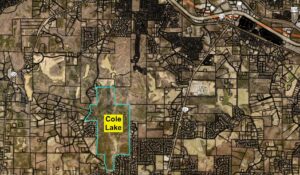
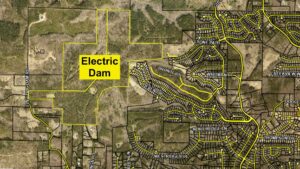
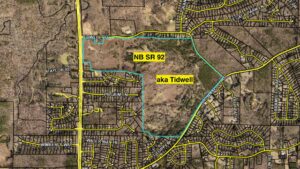
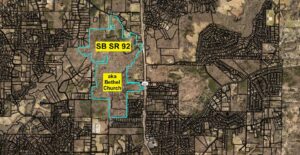
These parcel maps provide the exact geographic ammunition needed to make the 25-speaker strategy airtight. Looking at these four specific locations—Bethel Church (SB SR 92), Cole Lake, Electric Dam, and Tidwell (NB SR 92)—you aren’t just looking at land boundaries; you are looking at the exact friction points where these industrial footprints collide with established residential neighborhoods and critical watersheds.
To build out the full 25-speaker matrix, we will explicitly integrate these specific site layouts so that speakers can point directly to the maps and force the Commissioners to look at the immediate collateral damage.
The 25-Speaker Master Agenda Matrix
Block 1: The Environmental & Watershed Threat (Speakers 1–5)
This block establishes that the heavy grading on these four specific sites will cause immediate downstream ecological degradation to Sweetwater Creek and local water security.
Speaker 1: Matrix Opening & The Sweetwater Headwaters Link
-
Focus: The regional environmental reality.
-
Key Argument: The headwaters of Sweetwater Creek originate right here in Paulding. Heavy grading across hundreds of acres changes natural soil absorption into rapid storm runoff, directly threatening Sweetwater Creek State Park downstream.
-
The Script: Use the core “Headwaters Threat” template previously detailed.
Speaker 2: The Cole Lake Parcel – Deep Watershed Encroachment
-
Focus: The specific topography of the Cole Lake site.
-
Key Argument: Point to the Cole Lake map. This site sits squarely within a fragile web of local stream channels. Converting this vast, wooded parcel into acres of impervious rooftops and concrete pads will trigger massive siltation and erosion directly into the surrounding water channels.
-
The Ask: Demand that the EPD enforce a zero-net-runoff standard and refuse any local site approvals that risk altering the hydrology of the Cole Lake basin.
Speaker 3: The State Impaired Waters (303d) and TMDL Limits
-
Focus: Legal Clean Water Act thresholds.
-
Key Argument: Sweetwater Creek is already flagged on Georgia’s 303(d) list of impaired waters due to sediment. The law dictates strict Total Maximum Daily Load (TMDL) limits.
-
The Ask: The Board cannot in good conscience grant local land disturbance permits to industrial clusters that will inherently push a legally protected, already impaired waterway over its environmental limit.
Speaker 4: The Threat to Local Water Supplies & High Consumption
-
Focus: Industrial water draw vs. community needs.
-
Key Argument: Depending on their design, these four massive projects combined could demand millions of gallons of water daily for evaporative cooling. In times of seasonal drought, this directly threatens Paulding’s municipal water capacity and local aquifers.
-
The Ask: An immediate mandate requiring independent, third-party water availability studies before any local infrastructure agreements are signed.
Speaker 5: Natural Canopy Destruction and Heat Island Effects
-
Focus: The loss of the rural environmental cushion.
-
Key Argument: Look at the Bethel Church and Electric Dam maps—these are dense, contiguous tracts of green canopy. Clearcutting them replaces natural cooling forests with massive server blocks that radiate heat, destroying the local microclimate.
-
The Ask: Pass strict local tree-canopy retention ordinances specifically targeting high-impact technology zones to prevent total clearcutting.
Block 2: Zoning, Transparency & The Overlay Loophole (Speakers 6–10)
This block attacks the administrative process, exposing how these projects bypassed traditional public scrutiny via Technology Park Overlay Districts.
Speaker 6: The Administrative Bypass of the Public Trust
-
Focus: How these sites slipped through without typical rezoning signs.
-
Key Argument: Using technology overlay districts to skip traditional, transparent public hearings blindsides the community. The residents bordering the Tidwell and Bethel Church sites deserved a clear, standard legislative voice before these plans advanced.
-
The Ask: A total freeze on the use of Technology Park Overlays until the county updates its zoning notification laws.
Speaker 7: The Precedent of Overlay Removal
-
Focus: Consistency in county governance.
-
Key Argument: The Board has previously recognized the inherent flaws and community friction caused by technology overlays when adjustments were made in other posts (such as Post 4).
-
The Ask: Equal protection across all districts. If the overlay mechanism was deemed inappropriate or too aggressive there, it must be repealed here to protect these four tracts.
Speaker 8: Spot Zoning and Future Comprehensive Plan Conflicts
-
Focus: Paulding’s long-term vision.
-
Key Argument: Dropping massive, heavy industrial uses directly adjacent to high-density residential subdivisions completely contradicts Paulding County’s Long-Range Comprehensive Plan, which emphasizes smart, harmonious growth.
-
The Ask: A formal review by the planning commission to determine if these four sites violate the spirit of the Comprehensive Plan.
Speaker 9: Demanding UDO (Unified Development Ordinance) Reform
-
Focus: Closing the regulatory gaps.
-
Key Argument: Our current land-use rules never anticipated data centers of this scale. The definition of a “Technology Park” shouldn’t be a Trojan horse for heavy industrial utility users.
-
The Ask: Direct the county attorney to draft text amendments to the UDO explicitly defining data centers as a heavy industrial use requiring a Special Use Permit (SUP) in all districts.
Speaker 10: The Cole Lake Road Zoning Disconnect
-
Focus: Immediate lack of local notification.
-
Key Argument: Focus on the Cole Lake parcel, noting its proximity to Highway 120 and local connectors. The rapid advancement of this plan without robust, localized town halls shows a critical failure in community outreach.
-
The Ask: Tabling all current site reviews until a mandatory 90-day community impact presentation is hosted by the developers.
Block 3: Power Grid & Infrastructure Strain (Speakers 11–15)
This block transitions from the land to the grid, proving that these four projects represent an unsustainable resource drain on local utilities.
Speaker 11: The Gigawatt Demand vs. GreyStone Power Capacity
-
Focus: The sheer volume of energy required.
-
Key Argument: Four data center complexes will consume hundreds of megawatts—potentially scaling into the gigawatt range. This immense draw places unprecedented stress on our local electrical infrastructure and cooperative networks like GreyStone Power.
-
The Ask: Require the developers to present certified grid-capacity letters proving their demand will not compromise local residential reliability.
Speaker 12: The Threat of Rate Hikes for Residential Consumers
-
Focus: The economic burden on the taxpayer.
-
Key Argument: When massive industrial users force utilities to build new substations and transmission lines, those capital costs are frequently distributed down to regular residential rate-payers. Paulding families shouldn’t subsidize tech multi-nationals.
-
The Ask: Demand a binding fiscal impact analysis showing exactly how these developments will affect local residential utility rates over the next ten years.
Speaker 13: The Inefficient Land-to-Job Ratio (The Job Paradox)
-
Focus: Economic reality vs. developer promises.
-
Key Argument: Look at the massive acreage on the Tidwell (NB SR 92) and Bethel Church (SB SR 92) maps. These projects swallow immense amounts of commercial land and utility capacity, yet once built, they employ only a handful of security guards and technicians. They are space and resource hogs that offer no real career pathing for local residents.
-
The Ask: Prioritize commercial zoning for businesses that actually bring diverse, high-density employment opportunities to Paulding County.
Speaker 14: Substations and High-Voltage Transmission Line Proliferation
-
Focus: The visual and physical infrastructure sprawl.
-
Key Argument: To feed these sites, massive new high-voltage transmission lines and sprawling industrial substations will cut through neighboring properties, permanently scarring the landscape.
-
The Ask: Enact strict visual buffer and mandatory undergrounding requirements for all new industrial power delivery infrastructure.
Speaker 15: The Infrastructure Maintenance Burden on County Roads
-
Focus: Heavy construction impacts.
-
Key Argument: The multi-year construction phase for four distinct locations means thousands of heavy equipment trips tearing up local arteries like SR 92, Tidwell Road, and Cole Lake Road. The long-term road repair costs will fall right back onto the county budget.
-
The Ask: Implement a mandatory industrial impact fee on these developers to fund front-end road reinforcement and repairs.
Block 4: Quality of Life & Direct Residential Nuisance (Speakers 16–20)
This block focuses on the human element, using the maps to show how closely these massive projects encroach on actual backyards.
Speaker 16: The 24/7 Low-Frequency Noise Pollution
-
Focus: Constant acoustic disruption.
-
Key Argument: Data centers operate massive, industrial-scale chiller fans and HVAC systems 24 hours a day, 365 days a year. The constant, low-frequency hum is a documented sleep and health disruptor that carries for thousands of feet into quiet neighborhoods.
-
The Ask: Pass a strict, enforceable decibel limit measured directly at the property line, with mandatory shut-down penalties for non-compliance.
Speaker 17: Encroachment on the Residential Borders of Electric Dam
-
Focus: Direct proximity to families.
-
Key Argument: Point directly to the Electric Dam map. Look at how the yellow boundary directly hugs the dense, winding residential streets like Bronte Drive, Deven Drive, and Westridge Circuit. These aren’t far-off industrial zones; these server walls will be sitting directly in the backyards of families living on Whitman Court and Northridge Lane.
-
The Ask: Reject any site plan that does not include a mandatory, minimum 500-foot undisturbed natural buffer between the industrial footprint and any residential property line.
Speaker 18: The Core Threat to the Communities of SR 92 (Bethel Church & Tidwell)
-
Focus: The squeeze on the SR 92 residential corridors.
-
Key Argument: Look at the Bethel Church (SB SR 92) and Tidwell (NB SR 92) maps. Both sites are tightly flanked by dense grids of local neighborhood streets—like Pilgrim Lane, Glory Lane, Water Way Trail, and Wimberly Way. Dropping massive industrial complexes directly adjacent to these established family homes completely destroys the neighborhood dynamic.
-
The Ask: Protect the integrity of the SR 92 residential corridors by preventing heavy industrial zoning creep into these family-centric zones.
Speaker 19: Diesel Emission Risks from Massive Backup Generators
-
Focus: Air quality and public health.
-
Key Argument: To ensure uptime, these facilities house rows of massive multi-megawatt industrial diesel backup generators. Periodic testing and emergency operations release tons of particulate matter directly into the air currents blowing over neighboring subdivisions.
-
The Ask: Mandate rigorous local air-quality monitoring and strict operational limits on generator testing frequencies.
Speaker 20: Property Value Destruction and Loss of Rural Character
-
Focus: Financial damage to homeowners.
-
Key Argument: People move to Paulding County and invest their life savings into homes here specifically for the peace, privacy, and rural-suburban character. Surrounding an established neighborhood with massive, uninviting concrete blocks and security fencing instantly decimates local home equity.
-
The Ask: Hold developers financially accountable via property value protection agreements, or deny the site plan completely to preserve the community’s primary investments.
Block 5: Political Accountability, Moratoriums & The Closing “Ask” (Speakers 21–25)
The final block hammers home the political stakes, citing successful regional precedents and forcing a definitive, legacy-defining choice onto the Commissioners.
Speaker 21: The Regional Precedent of Local Moratoriums
-
Focus: Showing that stopping or pausing is entirely normal and legal.
-
Key Argument: Paulding County would not be alone in taking a breath. Metro Atlanta counties and municipalities across Georgia (such as DeKalb County and others) have successfully passed strict temporary moratoriums on data center development to rewrite their ordinances.
-
The Ask: We aren’t asking for the impossible—we are asking this Board to utilize standard, legal legislative pauses to protect their constituents.
Speaker 22: The Cumulative Toll of Four Simultaneous Projects
-
Focus: The sheer scale of the combined threat.
-
Key Argument: Maybe the county could debate the merits of one well-placed, highly isolated facility. But approving four massive complexes simultaneously—Tidwell, Bethel Church, Cole Lake, and Electric Dam—is a total industrial capitulation that permanently reshapes the county’s identity overnight.
-
The Ask: Force an immediate cumulative impact study of all four sites combined, rather than letting them slide through individually.
Speaker 23: The Illusion of Tax Revenue vs. Long-Term County Costs
-
Focus: Debunking the financial windfall myth.
-
Key Argument: The promised tax revenue from these facilities is highly front-loaded and often offset by massive infrastructure grants, fast depreciation schedules on technology hardware, and the immense long-term cost of utility management borne by the community.
-
The Ask: Demand a fully transparent, independent public audit of the true net-positive financial return after factoring in hardware depreciation and infrastructure wear.
Speaker 24: Remembering Who Elected This Board
-
Focus: Political accountability and local representation.
-
Key Argument: Out-of-state technology developers and shell corporations did not vote for this Board. The families living on Tidwell Road, Cole Lake Road, Bronte Drive, and along SR 92 did. The Board’s primary fiduciary and moral duty is to protect the health, safety, and welfare of Paulding’s citizens—not to streamline corporate real estate portfolios.
-
The Ask: A roll-call vote on any upcoming data center measures so the public record explicitly shows who stood with the residents and who stood with industrial expansion.
Speaker 25: The Closing Argument & The Master 180-Day Moratorium Demand
-
Focus: The final, unified crescendo.
-
Key Argument: Summarize the entire two hours of testimony: The environmental threat to Sweetwater Creek, the complete lack of zoning transparency, the severe grid strain, and the direct intrusion into neighborhoods like Electric Dam and SR 92.
-
The Final Script:
“Commissioners, you have heard from 24 distinct voices tonight representing thousands of your constituents. The evidence is undeniable. We have shown you the maps, the resource drains, and the direct threats to our water and quality of life. The time for passive review is over. We demand this Board introduce and pass an immediate 180-day emergency moratorium on all data center permitting, site plan reviews, and land disturbance approvals. Take these six months to fix our UDO, remove these predatory overlays, and protect Paulding County before the damage is permanent. Our community is watching, our families are waiting, and we expect you to stand with us. Thank you.”
Execution Tips for the July 14th Meeting:
-
Map Referencing: When Speakers 2, 17, and 18 stand up, they should hold up large, printed foam-core boards of the Cole Lake, Electric Dam, and SR 92 maps provided here. Pointing directly to the neighborhood cutouts (like Bronte Drive or Pilgrim Lane) while speaking anchors the technical arguments in undeniable physical reality.
-
The Roster Sign-In: Arrive at the meeting venue at least an hour early. The coordination team needs to ensure all 25 speakers sign the public comment sheet in this exact order so the thematic blocks roll out perfectly back-to-back without interruption.